Fall Lawn Care Checklist: What to Do Before Winter
If you only have one season to do right, make it fall.
For cool-season lawns, fall is when the real work happens. Fertilizing, aerating, overseeding, weed control. All of it is more effective in fall than spring. For warm-season lawns, fall is the wind-down window. Get it wrong and the lawn goes into winter weak and comes out struggling.
The checklist below covers both, in the right order.
Cool-Season Grasses (Tall Fescue, Kentucky Bluegrass, Fine Fescue)
Step 1 — Aerate (late August through September)
Core aerate when soil temperatures are between 50 and 65 degrees and the grass is actively growing. This is the single most important timing consideration for aeration. Do it too early in summer heat and you stress the lawn. Do it when growth has stopped and recovery is slow.
Use a hollow-tine core aerator, not a spike aerator. Spike aerators push soil down and compact it further. Core aerators pull plugs out and create actual space for air, water, and nutrients to reach the root zone. Rent one from a hardware store or hire it out. Leave the plugs on the surface. They break down on their own within a couple of weeks.
Aerate more aggressively in high-traffic areas and wherever you have clay soil. One pass is standard. Two passes in perpendicular directions for severely compacted areas.
Step 2 — Overseed (late August through mid-October)
The window for overseeding cool-season grass is late August to mid-October, before soil temperatures drop below 50 degrees. Soil is still warm enough for germination but air temperatures are cooling down. Weed pressure is minimal in fall compared to spring. It's the best possible combination for new grass seed.
Overseed immediately after aerating if you're doing both. The aeration holes give seed direct soil contact without additional prep.
Seeding rates for overseeding into existing turf: 4 to 6 pounds per 1,000 square feet for Tall Fescue, 2 to 3 pounds per 1,000 square feet for Kentucky Bluegrass. For a full renovation of a bare or severely thin lawn, double those rates.
Keep the seedbed consistently moist with light, frequent irrigation until germination. Once seedlings are established, transition to deeper, less frequent watering.
Do not apply pre-emergent herbicide if you're overseeding. The two tasks are incompatible. Pre-emergent prevents all seed germination, not just weeds.
Step 3 — Fertilize (mid-September and November)
Fall is the most important fertilization window for cool-season grass. Two applications.
First application (mid-September): 1 to 1.5 pounds of nitrogen per 1,000 square feet. Use a slow-release product. This feeds the grass through active fall growth and starts building energy reserves for winter.
Second application (November): 1 pound of nitrogen per 1,000 square feet. Apply when the grass has slowed significantly but is still green. Quick-release nitrogen is fine for this application. This is often called a dormant feed and it fuels strong spring green-up. If you only fertilize once all year, this November application is the one to make.
Step 4 — Broadleaf weed control (September through October)
Fall is the best time to control perennial broadleaf weeds like dandelion, clover, and creeping Charlie. The plants are actively moving carbohydrates down into their root systems heading into winter. Herbicide absorbed through the leaves travels down with it. Kill rate is significantly higher in fall than spring.
Apply a selective post-emergent containing 2,4-D + dicamba when temperatures are between 50 and 85 degrees. Do not apply to newly seeded areas. Wait until new grass has been mowed at least twice before applying herbicide to overseeded sections.
Step 5 — Soil test (fall)
Fall results give you time to make corrections before spring. Apply lime if the soil pH is below 6.0. Lime works slowly and benefits from winter to break down in the soil. Apply sulfur if pH is above 7.0. Make note of phosphorus and potassium levels for spring fertilizer selection.
Test every two to three years on a healthy lawn. Test annually on a problem lawn.
Step 6 — Leaves
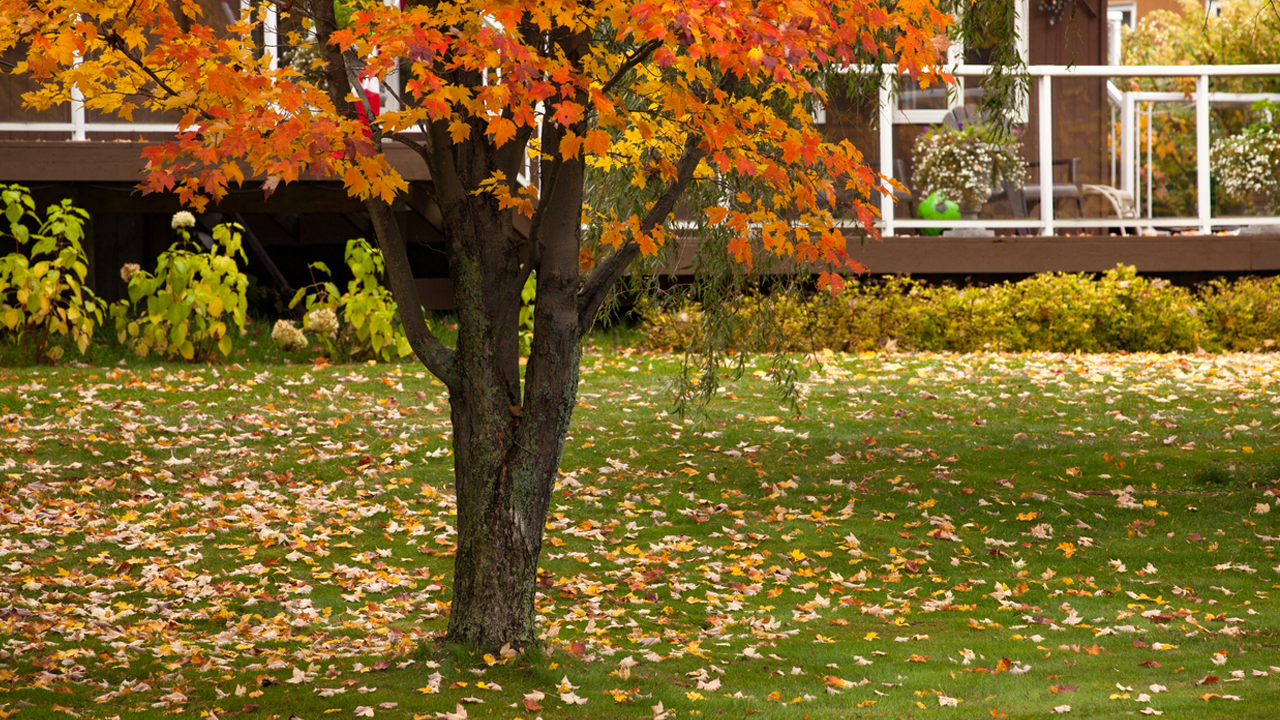
Remove leaves before they mat down. A light layer mulched with the mower is fine and actually benefits the soil. A heavy, wet mat of leaves sitting on the lawn through fall and winter blocks sunlight, traps moisture, and creates conditions for snow mold and other fungal disease.
Run the mower over light leaf cover and let the shredded material decompose naturally. Rake or blow heavy accumulations before they compact.
Step 7 — Final mow
Lower the mowing height slightly for the final cut of the season. Tall grass left over winter can mat and create disease pressure. Cut Tall Fescue to about 2.5 to 3 inches for the final mow. Cut Kentucky Bluegrass to 2 to 2.5 inches. Don't scalp the lawn. Just take it down a half inch from your regular summer height.
Warm-Season Grasses (Bermuda, Zoysia, St. Augustine)
Step 1 — Stop fertilizing at the right time
Make your last nitrogen application 6 to 8 weeks before your first expected frost. In Atlanta that's typically mid-September. In Dallas, late September to early October. In Charlotte, early to mid-September.
Nitrogen after that window pushes new growth that can't handle cold. That tender growth dies at first frost and weakens the plant going into dormancy.
Step 2 — Apply potassium (early to mid-fall)
Potassium strengthens cell walls and improves cold hardiness. If your soil test indicates a need, apply a low-nitrogen, high-potassium fertilizer 4 to 6 weeks before first frost. A 10-0-40 ratio works well. This is not optional if your soil test shows low potassium. It makes a meaningful difference in how the lawn comes through winter.
Step 3 — Fall pre-emergent (late August to mid-September)
Apply a second pre-emergent in late summer to control winter annual weeds like annual bluegrass and henbit. These germinate in fall when soil temperatures cool to 70 degrees. Prodiamine or pendimethalin work for this application. This keeps your lawn looking cleaner during dormancy and reduces spring weed pressure.
Step 4 — Disease treatment (Bermuda)
Bermuda lawns with spring dead spot history need a fall fungicide application even though no symptoms are visible yet. The fungal pathogen becomes active in fall and infects the crowns and roots. You won't see the damage until spring green-up. Thiophanate-methyl or azoxystrobin applied in September or October interrupts this cycle. Apply to affected areas from the previous spring.
Step 5 — Weed control
Cool-season weeds become highly visible against a dormant warm-season lawn. Broadleaf weeds like henbit and chickweed stand out clearly. Spot-treat with a selective post-emergent herbicide. Read the label. Some products are not safe for dormant warm-season grass. If your lawn is fully dormant and brown, a non-selective herbicide can be used carefully on visible weeds only.
Step 6 — Final mow
Mow at your regular height until the lawn stops growing. Make the final cut slightly higher than normal to protect crowns from cold damage. Don't scalp warm-season grass going into winter. The extra blade height provides some insulation for the crown tissue at the soil surface.
Step 7 — Reduce irrigation
Begin reducing irrigation frequency as rainfall increases and temperatures drop. Dormant warm-season grass has very low water needs. Stop regular irrigation once the lawn is fully dormant. Only water during an extended dry, windy period to prevent desiccation of roots and crowns.
Both Grass Types
Service the mower. Before you put it away for winter, sharpen the blade, change the oil, and clean the deck. A ready mower in spring means one less delay when the season starts.
Store fertilizer and chemicals correctly. Keep fertilizer in a dry location. Freeze-thaw cycles can cause granular fertilizer to clump and not spread evenly next season. Store liquid products above freezing.
FAQ
Is fall or spring more important for lawn care?
For cool-season grasses, fall is more important by a significant margin. The fertilization and overseeding windows in fall produce results that spring applications simply cannot match. For warm-season grasses, both seasons matter but for different reasons. Spring is active growth and fall is preparation for dormancy.
When is the last safe date to overseed in fall?
6 to 8 weeks before your first expected frost is the latest reliable window. New grass needs that time to germinate and develop enough root system to survive winter. Seeding after mid-October in Zone 5 to 6 is a gamble. Zone 7 can push to late October in a warm year.
Do I need to rake leaves if I mulch them?
Mulching light leaf cover is fine and beneficial. The issue is heavy accumulation. If you can still see the grass through the leaf layer after mulching, you're fine. If the leaves are so thick the mower is struggling to process them, rake first and then mulch the remainder.
Should I water in fall?
Cool-season grasses need water through fall if rainfall is insufficient. Keep providing about 1 inch per week until growth stops. Warm-season grasses need progressively less as they enter dormancy. Stop regular irrigation once the lawn is fully brown.
See all seasonal guides → getturf.app/guides/seasonal